
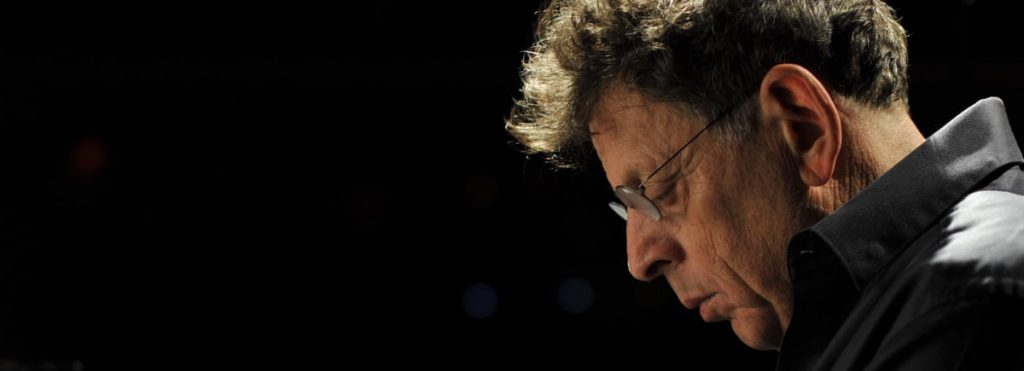
Phillip Glass
About
Philip Glass emerged as a pioneering minimalist composer during the 1960s, fundamentally reshaping contemporary classical music through his innovative use of repetitive structures and arpeggiated patterns. After studying composition and working as a plumber and taxi driver in New York, Glass developed his distinctive compositional voice, which departed radically from the prevailing twelve-tone techniques of his era. His breakthrough came with the creation of his early operas and symphonic works, which introduced audiences to his hypnotic, process-based approach to music. This revolutionary style, built on additive processes and continuous loops, established Glass as a central figure in the minimalist movement alongside contemporaries like Steve Reich and John Adams.
Glass's prolific output has included numerous operas, symphonies, and film scores that have secured his place among the most significant composers of the late twentieth century. His notable works span multiple mediums and continue to captivate audiences worldwide, demonstrating the profound versatility of his minimalist aesthetic. The lasting impact of his compositional innovations extends far beyond classical concert halls, influencing popular music, electronic music, and film scoring. Glass's legacy remains that of a visionary artist who demonstrated how repetition and subtle variation could create deeply moving and intellectually sophisticated musical experiences.
Podcasts & Interviews
- Article Getting Bubbly With Derek Brown Of The Flaming Lips
- Article Pink to Rob Thomas Video
- Article Pink to Rob Thomas
- Article No Doubt To Public Enemy
Is This Your Page?
If you are Phillip Glass, apply to claim this page, update your profile, and manage your presence on Masters Radio.
Claim This Page