
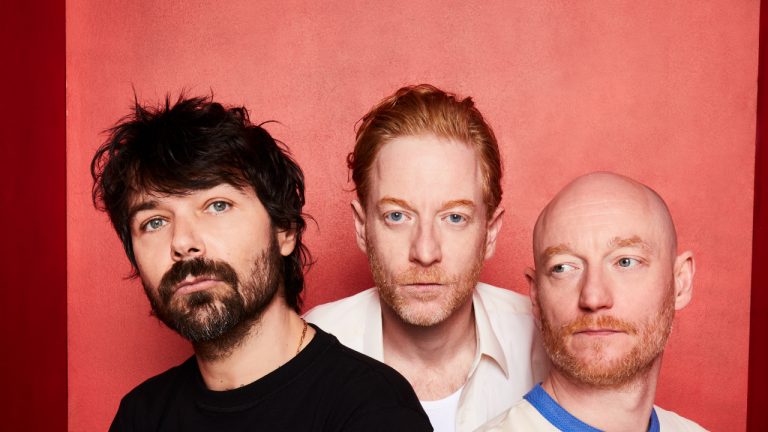
There are certain bands Americans discover and immediately assume are “new.” Meanwhile, the rest of the planet has been selling out arenas with them for fifteen years. That’s basically the story of Biffy Clyro.
In the United Kingdom and across parts of Europe, Biffy Clyro isn’t some underground indie secret whispered about by guys wearing obscure festival shirts and judging your record collection. They’re massive. Headline massive. Festival closing massive. Thousands of people screaming every lyric back at the stage massive.
And yet somehow in the United States, they still exist in this strange alternate dimension where music fans either:
- Have never heard of them
- Know one song vaguely
- Became obsessed after hearing them once and immediately started yelling at friends, “HOW ARE THESE GUYS NOT BIGGER HERE?”
There really isn’t much middle ground. Part of the problem may be timing.
Biffy Clyro arrived during an awkward stretch in American rock where mainstream radio was busy feeding audiences a steady diet of overproduced corporate alt rock that sounded like it had been assembled by focus groups in a conference room beside a broken Keurig machine.
Meanwhile, Biffy was out there making gigantic emotional rock songs filled with weird structures, explosive dynamics, progressive influences, massive hooks, and actual personality.
Which, apparently, was asking way too much from U.S. radio programmers. The interesting thing is they should have been perfect for American audiences.
They have the emotional weight of Foo Fighters, the unpredictability of Muse, the giant choruses of Kings of Leon, and the occasional beautiful chaos of At the Drive-In. But instead of becoming a household name in America, they became one of those bands music fans “discover” years late and then spend the next month annoyed nobody told them sooner.
Songs like “Mountains,” “Many of Horror,” “Biblical,” and “Instant History” feel engineered for giant crowds screaming lyrics into the night while holding overpriced beer cups and questioning their relationships. And then there are the deeper cuts. That’s where Biffy Clyro really gets dangerous.
Because underneath the arena rock surface is a band completely willing to get weird. Time changes. Abrasive guitar textures. Fragile emotional turns. Sudden explosions. Quiet moments that feel deeply personal before the whole thing detonates again thirty seconds later.
They can write songs that sound enormous without sounding fake. That’s harder than people realize. A lot of bands chase “epic.” Very few actually earn it.
Biffy earns it because there’s real emotion underneath the noise. Simon Neil doesn’t sound like somebody trying to manufacture vulnerability for streaming numbers. He sounds like somebody trying to survive his own thoughts with a guitar in his hands. That honesty travels.
Which explains why they built giant audiences around the world even while remaining weirdly underappreciated in the United States. Maybe that’s part of the charm now.
Because discovering Biffy Clyro today feels less like hearing a new band and more like uncovering a secret the rest of the world has been enjoying without us this entire time.
Which raises an uncomfortable question. How many other incredible artists are we missing because American radio decided fifteen years ago that we apparently needed another twelve Nickelback clones instead? Exactly.